![]()
The rise of Google’s AI Overviews is reshaping how people search and how websites get traffic. Instead of driving users to click through, Google now answers many queries directly on the results page. Businesses can stay visible by clear, intent-driven content, showcasing their expertise and by strengthening their brand presence. So, they’re recognized and mentioned, even within AI-generated answers.
What is Google AI Overview and how does it help users?
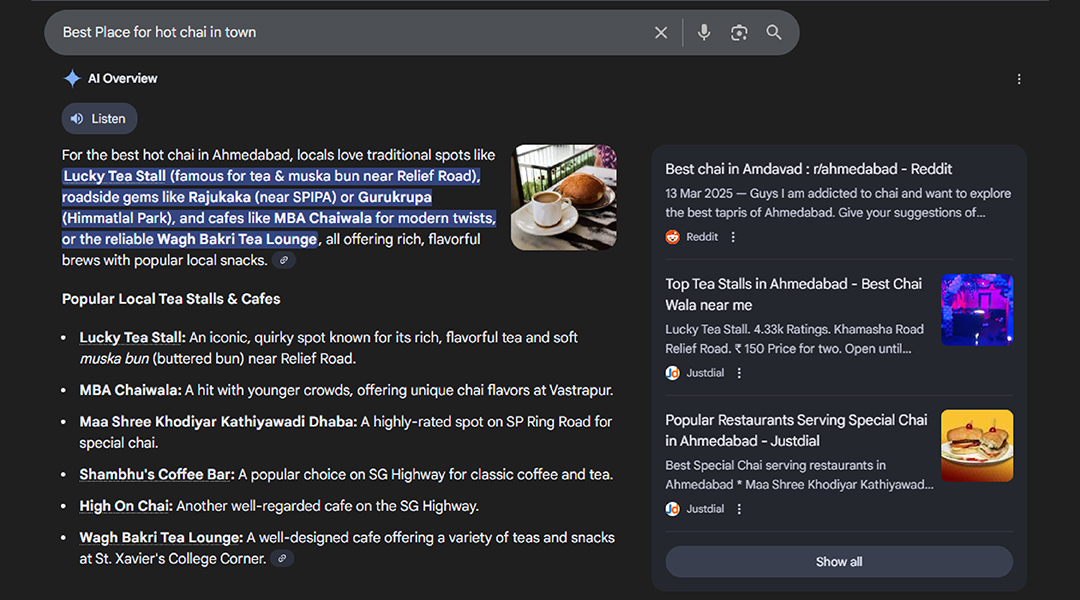
Google AI Overview is a search feature that uses generative AI to create quick, concise summaries at the top of search results, so users can grasp the main answer without opening multiple pages. It helps by breaking down complex questions, highlighting key points, and linking to relevant sources, which saves time and makes it easier to dive deeper into trusted content when needed.
So when you search something on google like “best place for hot chai in town” it will show you best top 10 places for chai in winter, so rather than writing on the history of chai, write it in such a way that the content must match the user query.
What to do for the new SEO Strategy in 2026
1. Optimize for Google’s AI Overviews (AIO) & Generative Search
Google’s AI now answers questions directly at the top of search results. Your content needs to feed these AI summaries, not fight them.
What to do: Write crystal-clear answers in the first 100 words of your content. Use natural language that AI can easily extract and cite. Structure your content with specific questions as H2s, followed by direct, quotable answers. Think of yourself as writing content that AI assistants will want to reference.
2. Content Depth + Topical Authority Clusters
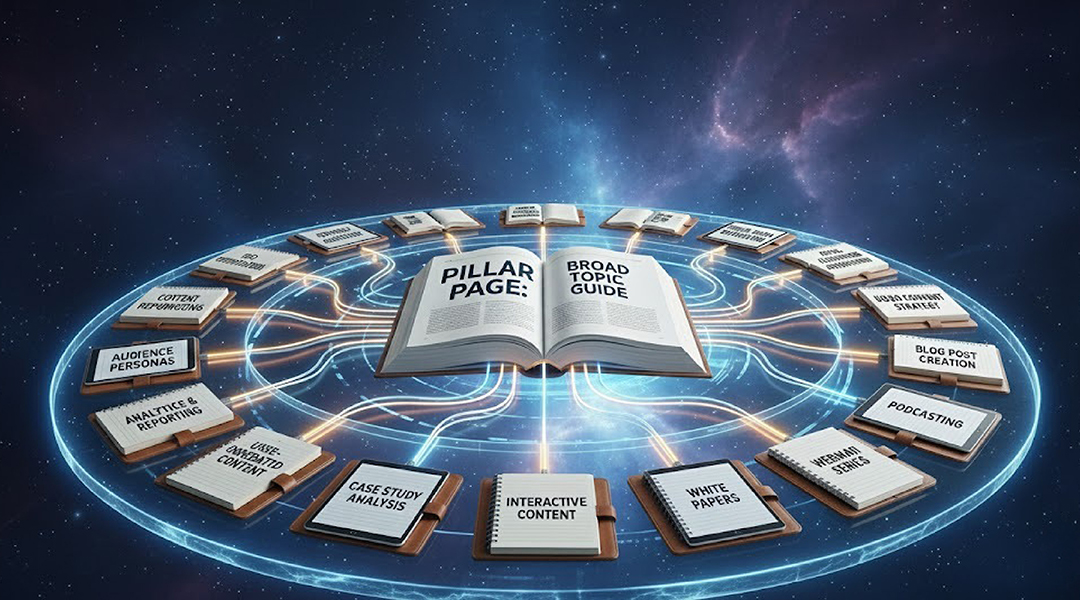
Surface-level blog posts are dead. Google now rewards sites that cover topics comprehensively across multiple related articles.
What to do: Build content hubs around one core topic. Create a pillar page that covers the broad topic, then write 10-15 supporting articles that dive deep into specific subtopics. Interlink them intelligently. Show Google you own this topic space.
Example: Don’t just write ” best digital marketing agency.” Create a marketing hub with separate deep-dives on web development, content writing, printing solutions and event planning. Then Link them all together.
3. Zero-Click Optimization (Featured Snippets & People Also Ask)
Here’s the paradox: even when people don’t click through, you still win. Zero-click results build brand authority and capture attention.
What to do: Target featured snippets deliberately. Write 40-60 word answers that directly address common questions. Use tables, lists, and step-by-step formats that Google loves to feature. Monitor “People Also Ask” boxes in your niche and create content that answers those exact questions.
4. Programmatic SEO (Using AI + Automation Ethically)
Scale is possible now, but only if you do it right. Programmatic SEO means creating hundreds of valuable pages efficiently without spamming.
What to do: Use AI to generate templates and first drafts for location-specific pages, product comparisons, or data-driven content. This is critical-add unique insights, local knowledge, or expert analysis to every page. Never publish pure AI output.
Smart examples: City-specific guides with real local data, product comparison pages with actual testing notes, or data visualization pages that interpret trends.
5. Semantic SEO + NLP Optimization (For LLM-based Search)
Language models power search now. They understand context, synonyms, and related concepts better than keyword stuffing ever could.
What to do: Write naturally for humans. Use variations of your main concept throughout your content. Instead of repeating “best running shoes” fifteen times, naturally mention “top athletic footwear,” “performance sneakers,” and “running gear.” Cover related subtopics that AI associates with your main topic.
Think like this: If someone asks an AI assistant about your topic, what related questions would come up? Answer those too.
6. Video SEO + Vertical Search Optimization
Video isn’t optional anymore. YouTube is the second-largest search engine, and video results dominate Google’s main search too.
What to do: Create video versions of your top-performing written content. Optimize YouTube titles and descriptions like you would in a blog post. Add timestamps, detailed descriptions, and transcripts. Embed videos in your articles to increase dwell time.
Vertical search matters: Optimize for Google Images with proper alt text and file names. Optimize for Google Maps if you’re local. Each vertical search engine is its own traffic source.
7. AI-Generated Content + Human Validation
AI content tools are everywhere. Google doesn’t penalize AI content-it penalizes bad content. The difference is human oversight.
What to do: Use AI for research, outlines, and first drafts. Then add your expertise: real examples, personal insights, updated data, and unique perspectives. Fact-check everything. Add personality. Make it sound like a human who knows their stuff, not a robot summarizing Wikipedia.AI scales your process. Humans add the value that makes content worth reading.
The Bottom Line
SEO in 2026 isn’t about tricks or hacks. It’s about creating genuinely useful content that both AI systems and humans can understand, trust, and want to share. Focus on depth over breadth, authority over volume, and real value over keyword optimization. And the best digital marketing agency near you knows the tricks and hacks for content that is relevant and trust-worthy. Because we care about the emotions of the reader rather than simply ranking higher on google search bar.
Stop guessing and hoping your old SEO hacks will somehow start working again-let’s rebuild your strategy for how search actually works in 2026. If you’re serious about turning rankings into real leads and revenue, schedule a call with our team today so we can audit your current approach and map out a practical, future-proof SEO and content plan tailored to your brand.
FAQs
Why are my old SEO tricks not working anymore?
Most older SEO tactics were built for keyword matching algorithms, but search in 2026 is driven by AI Overviews, semantic understanding, and user intent, so shallow or keyword-stuffed content no longer performs well.
What is Google AI Overview and how does it impact my website traffic?
Google AI Overview shows AI-generated summaries at the top of search results, which means many users get answers without clicking, so your content must be clear, authoritative, and optimized to be referenced within these summaries.
How can I optimize my content for AI Overviews and generative search?
You can structure articles around specific questions, give direct answers in the first 100 words, and use natural, conversational language so AI systems can easily extract and cite your content.
Are zero click results still valuable for my brand?
Yes, because even if users do not click through, appearing in featured snippets, People Also Ask, or AI Overviews builds strong brand visibility and authority in your niche.
What does topical authority mean in SEO 2026?
Topical authority is when your site covers a subject in depth through pillar pages and multiple interlinked subtopic articles, signaling to search engines that you are a trusted expert on that theme.
Can I still use AI tools to create SEO content?
Yes, you can use AI for research, outlines, and first drafts, but every piece should be reviewed, enriched with human insights, and edited for originality, accuracy, and brand voice before publishing